|
Power Purchase
Agreement
www.PowerPurchaseAgreement.com
"The
Future of Energy is 'Net Zero
Energy'
and
'Way Beyond Solar!'"
sm
"Net Zero Energy"
to Reach Revenues of $690 Billion / year by 2020
and $1.3 Trillion / year Industry by 2035
For
Power Purchase Agreement (PPA), Energy Services
Agreement (ESA)
& Net Zero Energy (NZE);
Advertising,
Architecture, Business
Development,
Engineering,
Marketing, Project Development or Sales solutions,
call
/ email the Renewable Energy Institute

Austin, Texas
marketing@PowerPurchaseAgreement.com

"Changing the Way the World
Makes and Uses Energy"
sm
Follow us on Twitter:
Thanks electric utilities and electric grid,
we'll take it from here!
|
Power Purchase Agreement
www.PowerPurchaseAgreement.com
What is a Power
Purchase Agreement?
A Power
Purchase Agreement or "PPA" is a legal agreement wherein
our clients agree to buy either the power (electricity) or the power and
energy (hot water, steam and/or chilled water for air-conditioning) - or both
- directly from us, for a term of 10 to 20 years, where we have installed, own
and operate our solar energy systems.
In
nearly every case, once we have installed our solar energy systems at our
client's facility, we can immediately reduce our (commercial) client's
electricity expenses by 10% over what they were paying for their power
electricity from their electric utility.
The
right Power
Purchase Agreement for a CHP
system, solar
cogeneration or rooftop
PV energy solution, may save your company thousands, and possibly
hundreds of thousands of over the term of the agreement.
Simultaneously,
having the wrong or poorly drafted PPA can cost your company thousands or
millions of dollars. You wouldn't consult a brain surgeon to treat your
child's broken bone! Selecting the wrong attorneys, law firm or team to
promulgate or re-negotiate your Power
Purchase Agreement can leave you "powerless" and
penniless - and still requiring the skills and expertise of competent and
qualified professionals to resolve the situation.
Because
a Power
Purchase Agreement is at the "heart" and underlying
foundation of most energy, renewable energy and power generation projects, you
need to insure that the PPA is an optimum agreement that you/your company can
live with over the 10-20 year period. Note: We are not attorneys and do not
provide legal advice but we do work with several attorneys and law firms that
have a record of providing PPA's that have secured project financing.
Products
and services provided by us include the following power and energy project
development services:
-
Project
Engineering Feasibility & Economic Analysis Studies
-
Engineering,
Procurement and Construction
-
Environmental
Engineering & Permitting
-
Project
Funding & Financing Options; including Equity Investment, Debt
Financing, Lease and Municipal Lease
-
Shared/Guaranteed
Savings Program with No Capital Investment from Qualified Clients
-
Project
Commissioning
-
3rd
Party Ownership and Project Development
-
Long-term
Service Agreements
-
Operations
& Maintenance
-
Green
Tag (Renewable Energy Credit, Carbon Dioxide Credits, Emission Reduction
Credits) Brokerage Services; Application and Permitting
Energy Service Agreement
www.EnergyServiceAgreement.com
What is an Energy
Services Agreement?
An
Energy
Service Agreement, also referred to as an Energy
Services Agreement is similar to a Power
Purchase Agreement.
While a Power
Purchase Agreement is typically limited electrical power generated
and sold, an Energy
Service Agreement delineates
and specifies the prices for all energy generated as an Energy
Service Company normally installs a highly
efficient trigeneration
energy system, which generates 3 energies for the price of one - and all the
energy a client customer will need - i.e. cooling,
heating and power.
Benefits
of an Energy
Services Agreement:
• No up-front capital costs
• Ability to monetize the tax incentives
• The ability to utilize accelerated depreciation
• Typically provides a known and long-term energy and power pricing
• No operations and maintenance responsibilities
• Minimal risk to the commercial, industrial or utility client
Net Zero Energy Buildings Are Coming - What About The Buildings Already Standing?
http://www.forbes.com/sites/justingerdes/2012/02/28/net-zero-energy-buildings-are-coming-what-about-the-buildings-already-standing/
Architecture
* Battery
Energy Storage * Bidirectional
Inverters * Bidirectional
Power * Clean
Power
Energy
Efficiency Measures *
Energy Master
Planning * Energy Storage
* Micro-Grids
Net Zero
Energy *
Net Zero Energy Retrofits
* Real Estate Development
* Solar
Trigeneration
"Changing the Way
the World Makes and Uses Energy"
Austin, Texas
marketing@ PowerPurchaseAgreement.com
Clean
Power Generation
Running on "green fuel" such as Biomethane,
B100 Biodiesel,
Synthesis Gas
or natural gas, our CHP
Systems are the greenest "clean
power generation" systems available.
With
Natural Gas at approximately $4.00/mmbtu, our Clean Power CHP
Systems generate power for about
$0.04 / kWh (fuel cost).
With operations & maintenance added, that's
about 5.5 cents /kWh - or approximately 50% - 60% less than what most commercial
customers are paying, on average, for their electricity.
CHP Systems (Cogeneration
and Trigeneration)
Plants
Have Very High Efficiencies, Low Fuel Costs & Low Emissions
The CHP System
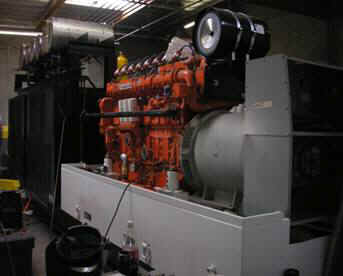
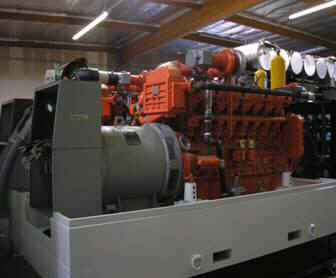
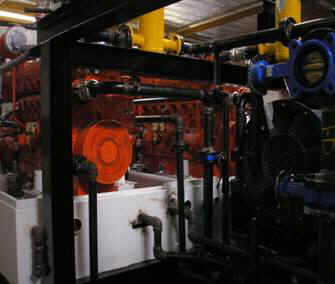
below is rated at 900 kW with a
heat rate of 4100 btu/kW & system efficiency of 92%.
The
CHP System
below features: (2) Natural Gas Engines @ 450 kW each
on one skid with optional Selective
Catalytic Reduction system
which removes Nitrogen
Oxides to "non-detect."
CHP
Systems and Dispersed
Generation power plants are an ideal solution for
data centers, district energy systems electric utilities, electric co-ops, electrical sub-stations,
energy service companies, food processing plants, hospitals, military bases
and universities among many others.
High-efficiency CHP
Systems eliminate blackouts, electric grid supply problems and
significantly reduce greenhouse
gas emissions and hazardous
air pollutants associated with electric power generation at central
power plants.
A
CHP System
may be the best solution for your company's economic and environmental
sustainability as we "upgrade" natural gas to clean power with our clean
power generation solutions. Our emissions
abatement solutions reduce nitrogen
oxides (NOx) to "non-detect" and can be installed and
operated in most EPA non-attainment regions!
Our CHP Systems
may be the best solution for your company's economic and environmental
sustainability as we "upgrade" natural gas to clean power with our clean
power generation solutions.
Our Emissions
Abatement solutions reduce Nitrogen
Oxides to "non-detect" which means our CHP Systems
can be installed and
operated in most EPA non-attainment regions!
What is "Decentralized Energy"?
Decentralized
Energy
is the opposite of "centralized energy."
Decentralized
Energy
energy generates the power and energy that a residential, commercial or
industrial customer needs, onsite. Examples of decentralized energy production
are natural gas fueled CHP
Systems, Rooftop
PV and solar
cogeneration energy systems.
Today's
electric utility industry was "born" in the 1930's, when fossil fuel
prices were cheap, and the cost of wheeling the electricity via transmission
power lines, was also cheap. "Central" power plants could be
located hundreds of miles from the load centers, or cities, where the
electricity was needed. These extreme inefficiencies and cheap fossil fuel
prices have added a considerable economic and environmental burden to the
consumers and the planet.
Centralized
energy is found in the form of electric utility companies that generate power
from "central" power plants. Central power plants are highly
inefficient, averaging only 33% net system efficiency. This means that the
power coming to your home or business - including the line losses and
transmission inefficiencies of moving the power - has lost 75% to as much as 80%
energy it started with at the "central" power plant. These
losses and inefficiencies translate into significantly increased energy expenses
by the residential and commercial consumers.
Decentralized Energy
is the Best Way to Generate Clean and Green Energy!
How
we make and distribute electricity is changing!
The
electric power
generation, transmission and distribution system (the electric
"grid") is changing and evolving from the electric grid of the
19th and 20th centuries, which was inefficient, highly-polluting, very
expensive and
“dumb.”
The "old" way of generating and distributing
energy resembles this slide:
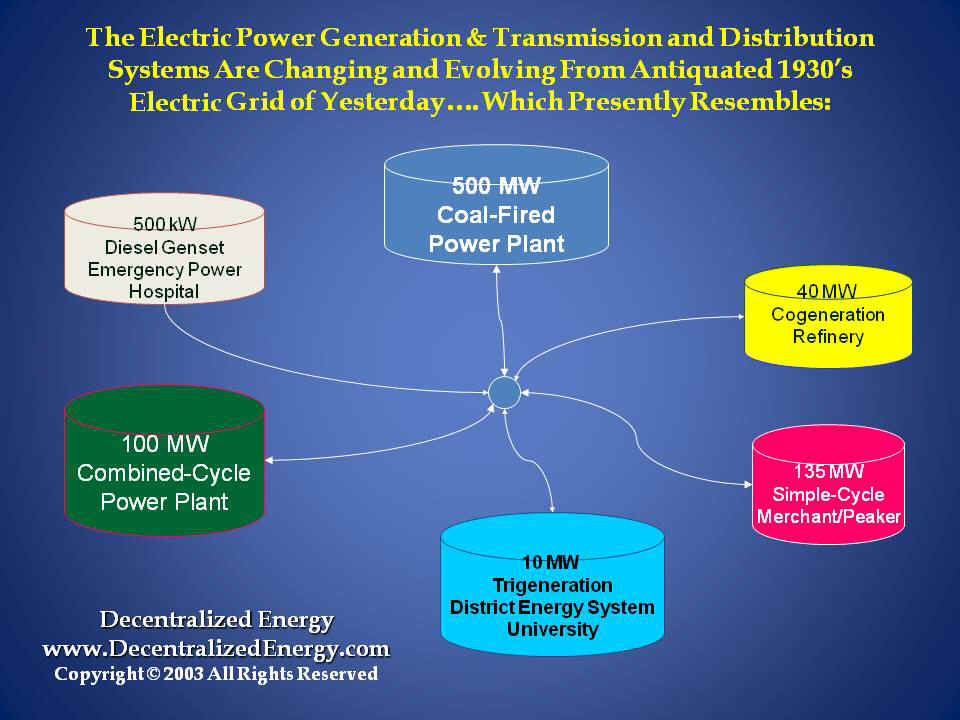
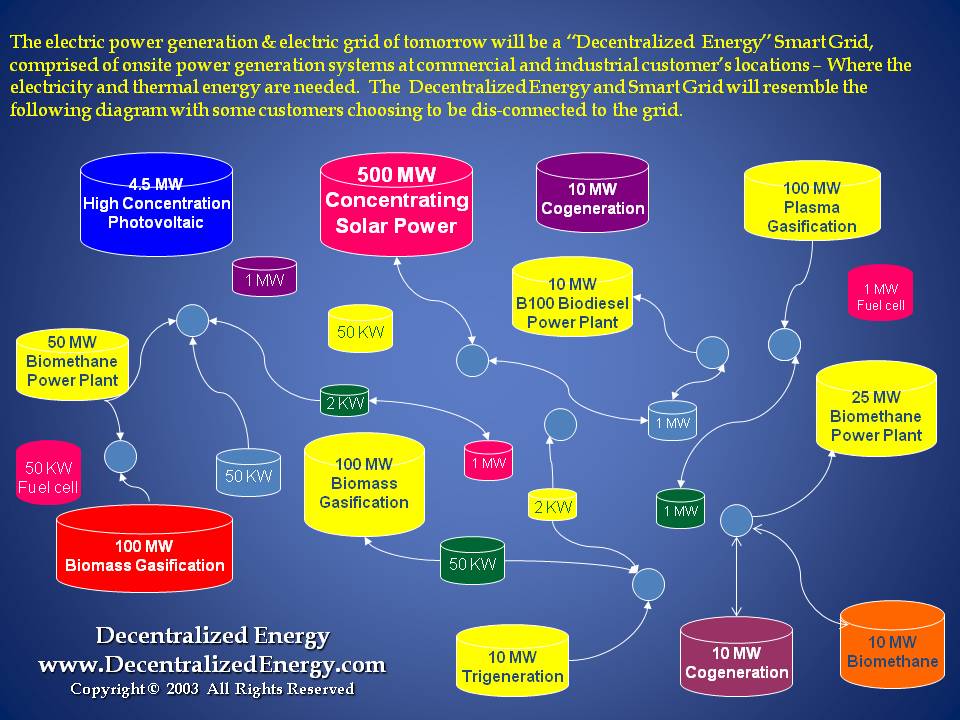
The electric grid of the 21st century (see slide below)
will be
Decentralized, Smart, Efficient and provide "carbon
free energy" and "pollution free
power” to customers who remain on the
electric grid. Some customers will choose to
dis-connect from the
grid entirely.
(Electric grid represented by the small light blue circles in the slide below.)
Typical
"central" power plants and the electric utility companies
that own them will either be shut-down, closed or go out of business due
to one or more of the following: failed business model, inordinate
expenses related to central power plants that are inefficient, excessive
pollution/emissions, high costs, continued reliance on the use of fossil
fuels to generate energy, and the failure to provide efficient, carbon
free energy and pollution free
power.
Carbon
free energy and pollution free
power can also reduce our dependence on foreign oil while
making us "energy independent" and reducing or eliminating Greenhouse
Gas Emissions.
* Some of the above information from the Department
of Energy website with permission.
What
is "Cogeneration"?
Did
you know that 10% of our nation's electricity now comes from "cogeneration"
plants?
And
because cogeneration
is so efficient, it saves its customers up to 40% on their energy expenses, and
provides even greater savings to our environment through significant reductions
in fuel usage and much lower greenhouse
gas emissions.
Cogeneration
- also known as combined heat and power (CHP), cogen, district energy, total energy, and
combined cycle, is the simultaneous production of heat (usually in the form of
hot water and/or steam) and power, utilizing one primary fuel such as natural
gas, or a renewable fuel, such as Biomethane,
B100 Biodiesel,
or Synthesis Gas.
Cogeneration
technology is not the latest industry buzz-word being touted as
the solution to our nation's energy woes. Cogeneration
is a proven technology that has been around for over 120 years!
Our
nation's first commercial power plant was a cogeneration
plant that was designed and built by Thomas Edison in 1882 in New York. Our
nation's first commercial power plant was called the "Pearl Street
Station."
Net Zero Energy
www.NetZeroEnergy.com
"Net Zero Energy"
to Become $1.3 Trillion/year Industry by 2035
What is Net
Zero Energy?
Net Zero
Energy - when applied to a home or commercial building, simply means that
they generate as much power and energy as they consume, when measured on an annual basis.
"Central
power plants" - which have been the typical method of providing
electricity for customers - are highly inefficient and are only 28% to 40%
efficient. This means that central power plants waste about 60% - 72% of the
energy in the form of "waste heat" electrical and mechanical
inefficiencies. In addition, enormous amounts of hazardous
air pollutants, volatile
organic compounds, nitrogen
oxides, mercury and greenhouse
gas emissions are unnecessarily spewed into the environment by these central
power plants. The electric grid, where the "brown
power" generated from the central
power plants is
distributed to "load centers" which is comprised of the local electric
utility's customers - homes and businesses - is also highly inefficient and
wasteful of vast amounts of energy.
Under
the American
Energy Plan, central power plants are no longer needed as all of the
clean power and energy is generated where the power and energy is needed - at
your home or business. The clean power and energy is produced through
"distributed
energy resources" such as "solar
cogeneration" or "solar
trigeneration" energy systems that are highly-efficient
producing. These homes and businesses will become "central
power plants" and if the homeowners and
business owners choose, they may completely dis-connect from the electric
grid.
The
U.S. Army now has a Net Zero
Energy initiative to help reduce/eliminate America's
use of foreign oil - particularly oil from muslim/middle-east countries
- which saves the lives of our brave soldiers in the
military.
Net
Zero Energy Market to Become $1.3 Trillion/year Industry by 2035
http://www.navigantresearch.com/newsroom/revenue-from-net-zero-energy-buildings-to-reach-1-3-trillion-by-2035
Net Zero Energy Buildings Are Coming - What About The Buildings Already
Standing?
http://www.forbes.com/sites/justingerdes/2012/02/28/net-zero-energy-buildings-are-coming-what-about-the-buildings-already-standing/
Trigeneration
www.Trigeneration.com
What is Trigeneration?
Trigeneration
is the simultaneous production of three forms of energy - typically, Cooling,
Heating and Power - from only one fuel input.
Stated
another way, our trigeneration power plants produce three different types of
energy for the price of one.
Trigeneration
energy systems now exceed the efficiency of central power plants by almost 300%
as overall trigeneration system efficiency is about 90%. Typical
"central" power plants, that do not need the heat generated from the
combustion and power generation process, are only about 33% efficient.
Basically,
a trigeneration power plant is a cogeneration power plant that has added
absorption chillers for producing chilled water from the heat that would have
been wasted from a cogeneration power plant.
In addition to the economic benefits and advantages, trigeneration plants reduce
our dependence on foreign energy supplies and help our environment by
dramatically reducing greenhouse gas emissions such as carbon dioxide - when
compared to typical power plants. Trigeneration has been hailed the
"hat-trick of the energy industry" with system efficiencies
approaching and exceeding 90%.
Trigeneration plants are very energy efficient, conserve natural resources and
reduce fuel consumption as the system operates at such high efficiencies.
Cogeneration and trigeneration power plants are about 90% efficient and
approximately 300% more efficient than "central power plants" that
average 27% to 40% efficiency. When fueled with renewable fuel, cogeneration and
trigeneration plants are carbon neutral, producing no greenhouse gas emissions
and the optimum solution for clients seeking to reduce their energy expenses and
greenhouse gas emissions.

Trigeneration
Diagram & Description
Trigeneration plaants' have the
highest system efficiencies and are
about 300 % more efficient than typical central power plants
Companies and industries that would
likely benefit from installation of their own Trigeneration plant include;
*
Airports
* Agriculture
* Casinos
* Central Plants
* City centers
* Colleges & Universities
* Company campuses
* Dairies
* Data Centers
* District Heating & Cooling
* Electric utilities
* Food Processing Plants
* Government Buildings and Facilities
* Grocery Stores
* Hospitals
* Hotels
* Manufacturing Plants
* Military Bases
* Nursing Homes
* Office Buildings
* Refrigerated Warehouses
* Resorts
* Restaurants
* Schools
* Server Farms
* Shopping centers
* Supermarkets

Trigeneration
Chart
Trigeneration's "Super-Efficiency" compared
with other competing technologies
As you can see, there is No Competition for Trigeneration!
What
is "Net
Positive Energy?"
Net
Positive
Energy - when applied to a home or commercial building, means
the home or business generates more power and energy than they consume, when
measured on an annual basis.
The excess power and energy can then be sold/transferred/exported to the grid or
to their surrounding neighbors in order to off-set and eventually replace the
"dirty brown electrons" generated from highly polluting and
inefficient "central power
plants."
What
is a "Positive
Energy Building?"
Net
Positive
Energy - A "positive energy building"
produces more energy (from renewable energy sources) than it consumes.
This surplus energy can then be sold to produce an income to a neighbor or
exported to the electric grid for revenue or a credit (see Net
Energy Metering).
About
us:
The
founder of the Renewable Energy Institute (REI) was first involved in Net Zero
Energy buildings and Solar
Trigeneration sm
energy system in 2001
- 2002. This started with family-owned real estate developments in
Northern and Southern California. This interest was accelerated when REI's
founder was introduced to the President of a solar company in Los Angeles and
their client, the Audubon Nature Center at Deb's Park (Los Angeles) that was
planning to build a new 5,000 sf office and conference center. Except, the new
building for the Audubon Nature Center was about 1/2 mile from the end of the
power lines and a very costly extension of the power lines to their new facility
forced them to consider a solar solution. When the Audubon Nature Center's new
5,000 sf office and conference center was completed in 2003, the facility not
only featured the Solar
Trigeneration sm energy
system - they were awarded one of the first Platinum LEED Awards by the USGBC -
and the powerlines were still 1/2 mile away! To this day, 100% of the power and
energy for the Audubon Nature Center's building is supplied by the Solar
Trigeneration sm
energy system - whether at 12 noon, or 12 midnite. (The Audubon's facility
also includes a battery
energy storage
system for back-up power generated by the Rooftop
PV
panels as well as a thermal energy storage system that stores the excess hot
water generated by the evacuated
tube collectors).
These early projects led to more client inquiries and engagements with real
estate developers, architects and building owners in Southern California,
Louisiana and Texas and the advent of a growing Net Zero
Energy industry along with Solar
Cogeneration sm
& Solar
Trigeneration sm
energy systems. This culminated in a family-owned 200
(Net Zero
Energy) home real estate development
in Desert Hot Springs which has been approved but not yet constructed.
During this time, the REI's Founder
became a volunteer and Advisor
to the University of Texas' Solar Decathlon Competition. He coordinated the
donation of the same solar
thermal system used at the Audubon Nature Center's facility in Los Angeles, for UT's entry in
the 2002 Solar Decathlon Competition in Washington, D.C. UT's entry in the
Solar Decathlon Competition placed 1st in the domestic hot water
competition
that year (2002) and 4th overall, out of 20 universities that had entered.
In
2006, after Hurricane Kattrina devastated New Orleans, the REI was
formed and several of the
REI's board members and a Professor from the University of Texas School of
Architecture formed a design team to enter the Brad Pitt/Global Green Rebuild New Orleans Competition.
Our entry also focused on sustainable building solutions and materials as well
as the Net Zero
Energy concepts, incorporating once again, a Solar
Trigeneration sm
energy system.
Today,
the REI "Flagship" has chartered the Renewable Energy Institute in
Florida, with discussions to open REI state chapters in Arizona, California,
Hawaii, Minnesota and Oregon.
The
REI supports greater use of Net Zero Energy systems by architects, builders, homeowners and
owners of commercial buildings. This includes "upgrading" homes and
commercial buildings to Net Zero Energy. The REI provides Net Zero Energy;
advertising, business development, conferences, e-commerce, education, marketing, online
marketing, public relations, renewable energy, sales and strategic marketing solutions for
architects, builders, cities, colleges, HVAC contractors, Net Zero Energy developers, real
estate developers and universities.
Net
Zero Energy Buildings Are Next Frontier
http://www.sustainablebusiness.com/index.cfm/go/news.display/id/23361
Net
Zero Energy Market to Become $1.3 Trillion/year Industry by 2035
http://www.navigantresearch.com/newsroom/revenue-from-net-zero-energy-buildings-to-reach-1-3-trillion-by-2035
Net Zero Energy Buildings Are Coming - What About The Buildings Already
Standing?
http://www.forbes.com/sites/justingerdes/2012/02/28/net-zero-energy-buildings-are-coming-what-about-the-buildings-already-standing/
“spending
hundreds and hundreds and hundreds of billions of dollars every year for oil,
much of it from the Middle East, is just about the single stupidest thing that
modern society could possibly do. It’s very difficult to think of anything
more idiotic than that.”
~ R. James Woolsey, Jr., former
Director of the CIA
According to R. James Woolsey, for Director of the Central Intelligence Agency, “The basic insight is to realize that global warming, the geopolitics of oil, and warfare in the Persian Gulf are not separate problems — they are aspects of a single problem, the West’s dependence on oil."
"Changing the Way
the World Makes and Uses Energy"
Austin, Texas
marketing@ PowerPurchaseAgreement.com
We
deliver solutions:
Acquisitions
Advertising
Business
Development
Capital Access
Divestments
Engineering
EPC
Marketing Strategies
Investment opportunities
Investor inquiries
Project Development
Public
Relations
Sales Solutions
Strategic Marketing
That produce results:
Increased
sales
New
customers
Greater
market share
Competitive advantage
Increased
shareholder value
American Energy Plan
sm
www.AmericanEnergyPlan.org
3-5 million new jobs
Fuel Savings of > $1.50/gallon
American Energy Independence
Ends the worst economic depression of all time
Balance
Of Plant - BOP
___________________________________________
www.BalanceOfPlant.com
Balance
Of System - BOS
___________________________________________
www.BalanceOfSystem.com
Battery
Energy Storage
___________________________________________
www.BatteryEnergyStorage.com
Concentrated
Solar Power - CSP
___________________________________________
www.ConcentratedSolarPower.com
Concentrating
Solar Power
___________________________________________
www.ConcentratingSolarPower.com
Decentralized
Energy
___________________________________________
www.DecentralizedEnergy.com
Distributed
Energy Resources
___________________________________________
www.DistributedEnergyResources.com
Energy
Investment Banking
___________________________________________
www.EnergyInvestmentBanking.com
Engineering
Procurement Construction - EPC
___________________________________________
www.EngineeringProcurementConstruction.com
Enhanced
Oil Recovery
___________________________________________
www.EnhancedOilRecovery.com
Front-end
Engineering Design - FEED
___________________________________________
www.FrontEndEngineeringDesign.com
Solar Power now
"Cheaper
than Coal!"
sm
Molten
Salt Storage
___________________________________________
www.MoltenSaltStorage.com
Net
Zero Energy
___________________________________________
www.NetZeroEnergy.com
NO
FOREIGN OIL!
www.NoForeignOil.com
Parabolic
Troughs
___________________________________________
www.ParabolicTroughs.com
Power
Purchase Agreements - PPA
___________________________________________
www.PowerPurchaseAgreement.com
Support
Renewable Energy
and America's
Renewable Energy Technologies
resources and companies!
Volatile
Organic Compounds - VOC
___________________________________________
www.VolatileOrganicCompounds.com
We
support the Renewable
Energy Institute by donating a portion of our profits to the Renewable
Energy Institute in their efforts to reduce fossil fuel use by
transitioning to Renewable
Energy Technologies and reducing/eliminating Carbon
Emissions, Carbon
Dioxide Emissions and Greenhouse
Gas Emissions.
The Renewable
Energy Institute is "Changing The Way The World Makes and
Uses Energy" SM by providing research & development,
funding and resources that reduce the cost of Renewable
Energy Technologies and
making a faster transition to Carbon
Free Energy, Clean
Power Generation, & Pollution
Free Power."
#PowerPurchaseAgreement
#PPA


"Changing the Way the World
Makes and Uses Energy"
sm
Power
Purchase Agreement
www.PowerPurchaseAgreement.com
marketing@ PowerPurchaseAgreement.com
PowerPurchaseAgreement.com
Copyright
© 2003
All Rights Reserved